Sarah Williams
Dw i wedi bod yn dysgu Cymraeg ar-lein gyda Dysgu Cymraeg Morgannwg am ddwy flynedd a hanner. Dechreuais i yn nhwll y gaeaf a dyfnderoedd isaf cyfnod cloi, ar adeg pan oedd darllenwyr newyddion yn darlledu o’u cartrefi gyda chefndir o silffoedd llyfrau, neu luniau o’u teuluoedd… hyd yn oed anifeiliaid anwes sy’n camymddwyn.
Eisteddais yn y dosbarth o flaen hen ddresel. A dweud y gwir, o flaen y dresel oedd yr unig le addas yn ein fflat blêr.
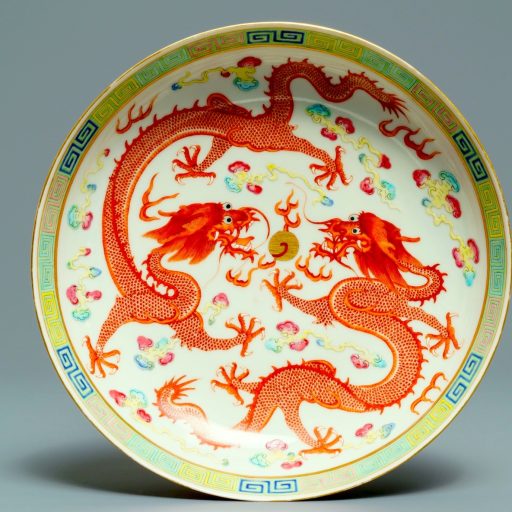
Mae’r platiau ar y dresel yn bwysig i fi. Roedd y plât modern gyda’r patrwm o ddwylo bach yn un o fy anrhegion ymddeol. Daeth y platiau glas a melyngoch o sêl cist car. Daeth y platiau gyda’r patrwm draig las o fy mam-gu.

Fel plentyn, ro’n i’n dwli ar y ddraig goch ar y faner genedlaethol gyda’i hanes cymhleth. Roedd y dreigiau glas yn rhan o’r un teulu, ro’n i’n siŵr. Daeth pob draig o Gymru, wrth gwrs!
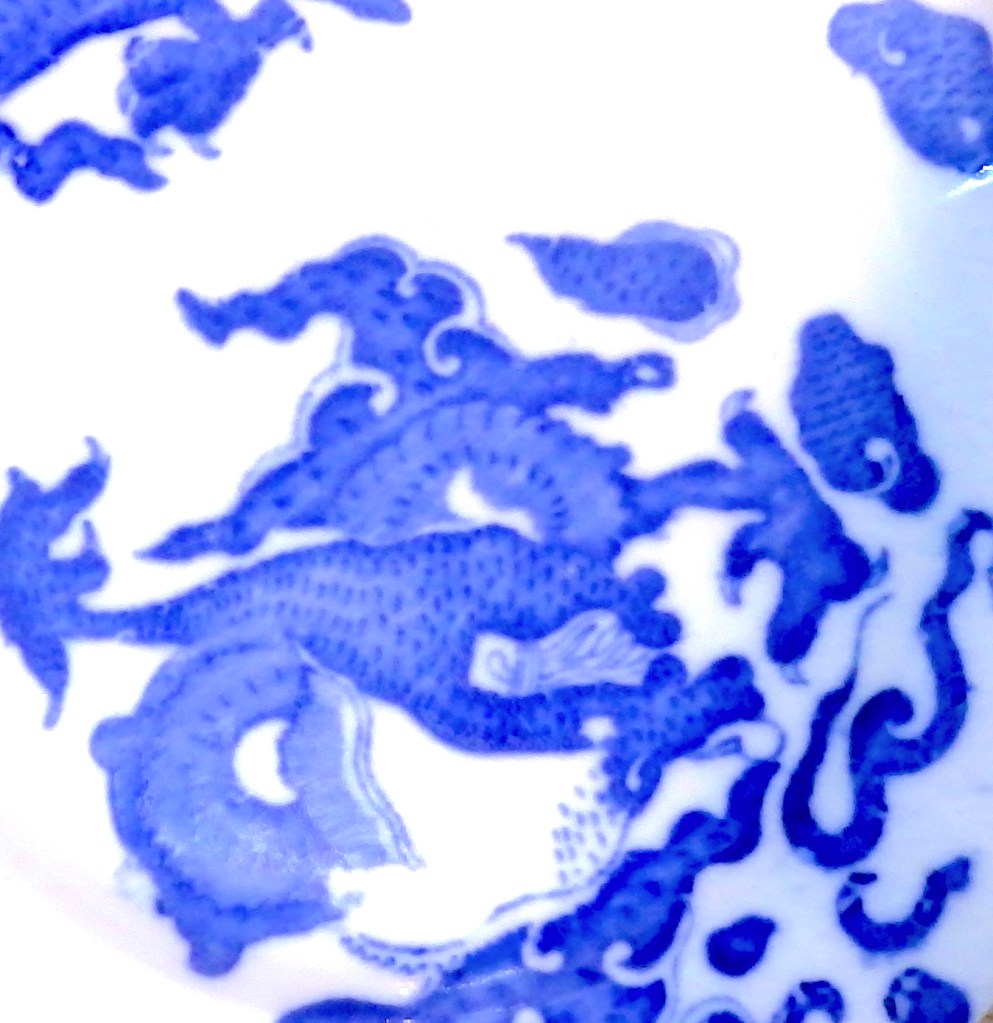
Ro’n i’n arfer copïo’r patrwm ar y platiau gan ddefnyddio pen ac inc ar bapur. Cafodd fy llun cyntaf ei arddangos ar wal cegin fy rhieni. Roedd yr ail lun yn fwy anodd; roedd y patrwm yn rhyfedd iawn. Ceisiais i ffeindio pen y ddraig ar y plât. Llawer o draed crafangog, ond does dim pen draig. Roedd cymylau rhyfedd glas a llinellau nadreddog hefyd. Oedden nhw’n rhan o’r ddraig?
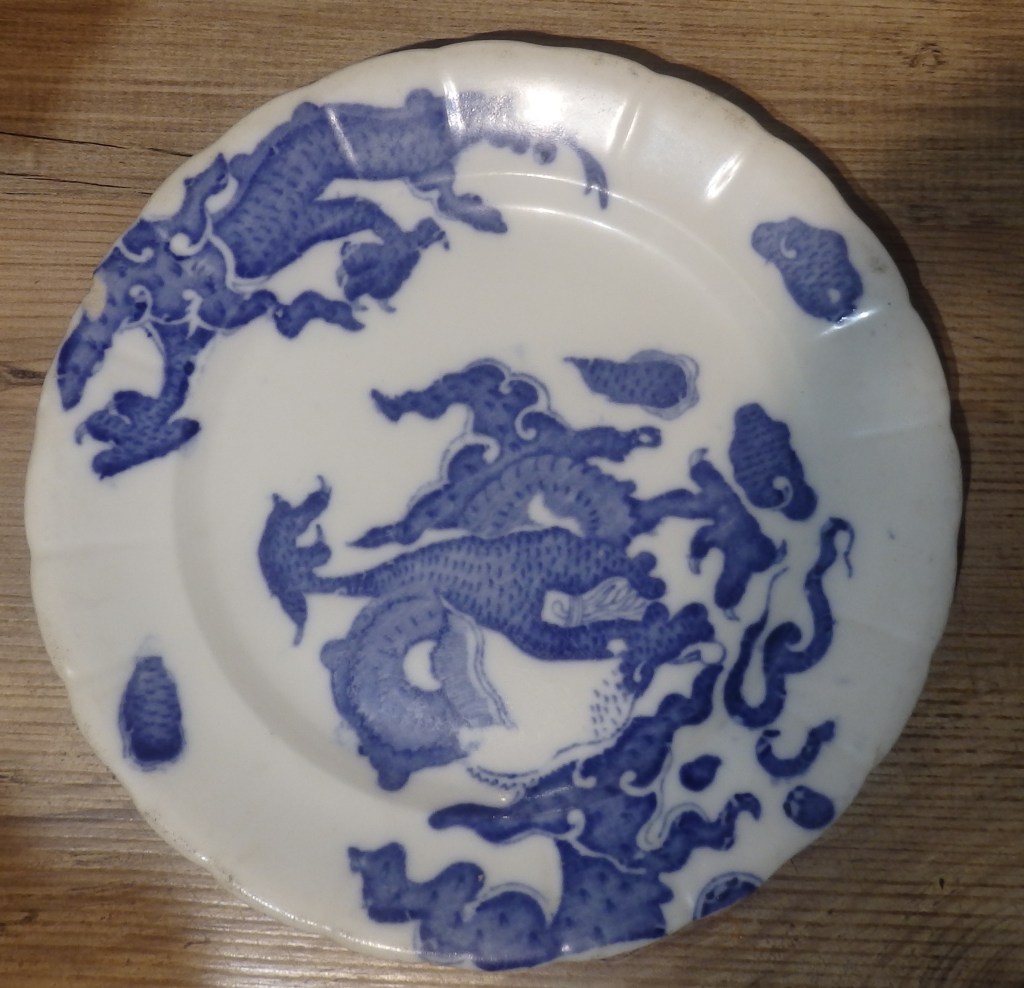
Pan o'n i’n hŷn, deallais taw dreigiau Tsieineaidd oedd y creaduriaid ond wedi’u copïo gan artistiaid mewn crochendai Prydeinig.

Yn llinach Yuan (1279 – 1368), datblygodd crochenwyr yn Jingdezhen, ddull o danio porslen cain. Dull cyfrinachol oedd e. Bydd bedair canrif yn ddiweddarach cyn i grochendai Ewropeaidd lwyddo i wneud porslen go iawn. Mae stori ffatri Nantgarw,  ger Caerdydd, yn un gyffrous iawn yn ei rhinwedd ei hun - darllenwch amdani yma. Heddiw, Nantgarw yw’r unig ffatri porslen Cymreig o’r 19eg canrif gynnar sy wedi goroesi.

Doedd llestri draig Brydeinig ddim yn ddrud ar y cyfan. Roedd yr enghreifftiau drutach, fel Royal Worcester, yn fwy cywir eu dyluniad. Pan oedd yr artistiaid Prydeinig yn copïo'r dyluniadau traddodiadol mewn rhai ffatrïoedd eraill, weithiau, do'n nhw ddim yn deall beth oedd yn digwydd yn y llun gwreiddiol. Felly - dreigiau heb bennau!

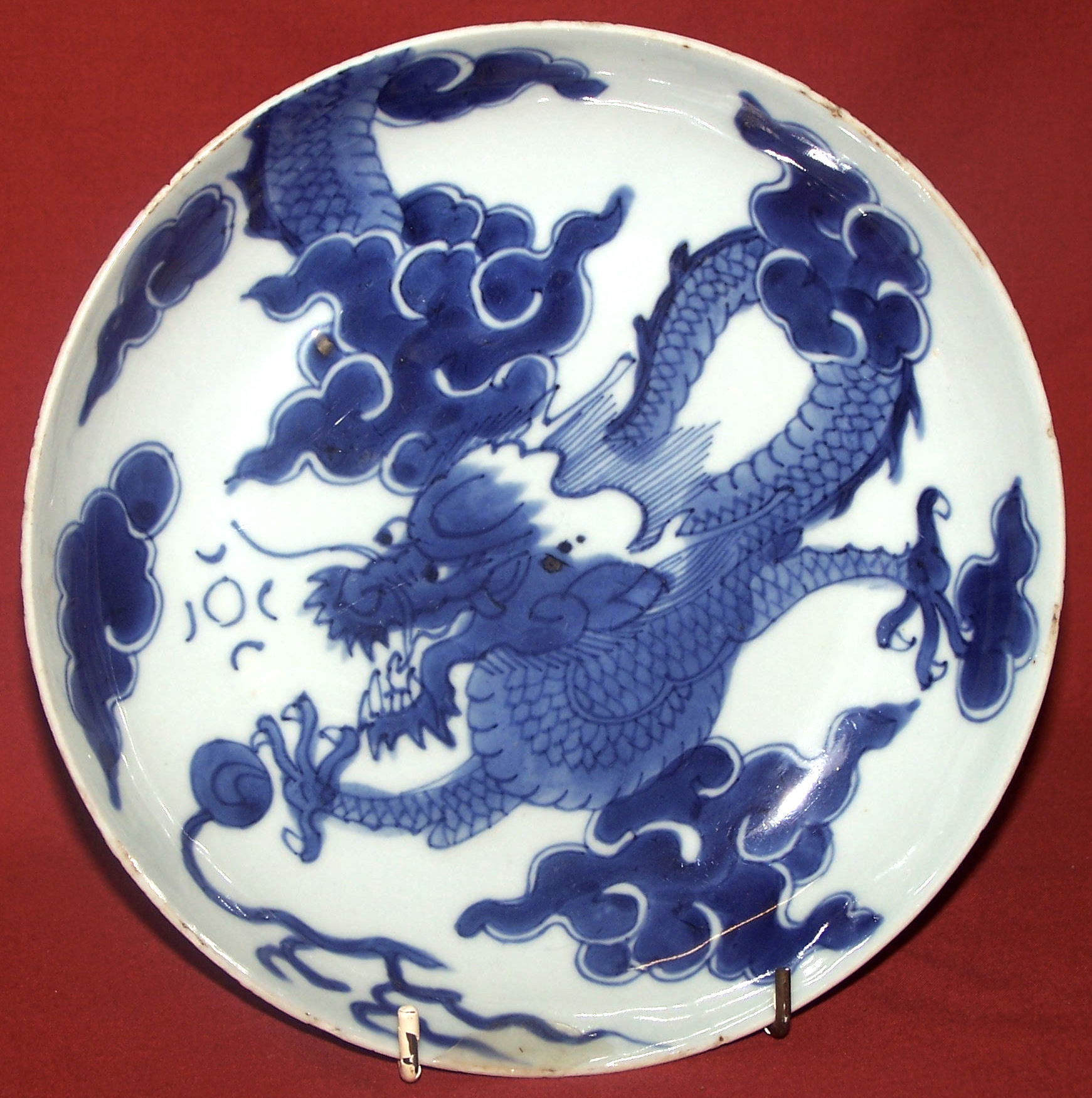
Mae’r platiau’n darlunio chwedl Tsieineaidd: mae'r ddraig ddi-ben-draw sy'n mynd ar drywydd y ‘Flaming Pearl’. Dyma enghraifft Tsieineaidd o'r llinach Kangxi: ddraig hyfryd - gyda phen! - yn ymestyn allan am y perl.


                         Plât Jingdezhen, China 1700-1710 © Victoria and Albert Museum

Roedd gyda'r chwedl wahanol ystyron mewn gwahanol amserau a lleoedd ond, yn y bôn, mae'r ddelwedd yn darlunio taith ysbrydol.

Mae Helmut Nickel yn olrhain delweddaeth dreigiau drwy'r oesoedd. Os yw delwedd y ddraig a'r perl yn cynrychioli cydbwysedd ysbrydol, a oes tebyg yn chwedlau draig Ewrop?

"A sublimation of the dragon-and-pearl motif ... is to be found in the Christian legend of St. Margaret, who was swallowed by a dragon but by the strength of her faith overcame and killed the monster, who burst its belly (like Daniel's Dragon of Babel) and let her emerge unscathed. Here the European perception of the dragon as feeding on virgins is blended with the Eastern motif of the pearl pursued by the dragon. The connecting link and clue lies in the saint's name, margarita, Latin for pearl".
The Dragon and the Pearl, Helmut Nickel, Metropolitan Museum Journal, 1991.

Stwff dwys! A oes delweddaeth o'r ddraig a'r perl yn niwylliant Cymru?
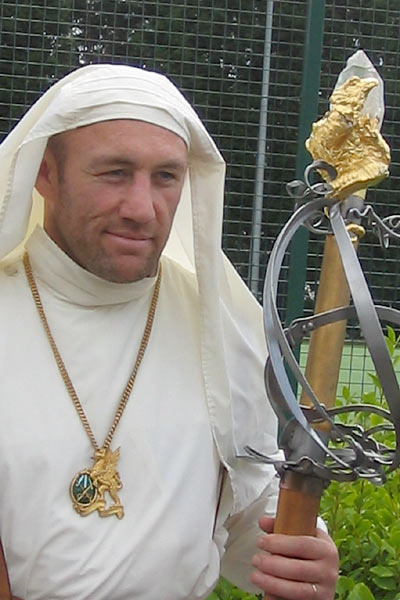
Wel, mae symbolau a regalia'r Orsedd  yn arbennig yn eu rhinwedd eu hunain, ond, yn y llun hwn, mae Ceidwad y Cledd yn gwisgo gemwaith bling sy'n edrych 'lot fel draig a pherl.
I am learning Welsh and welcome comments on attempts to write!
How Welsh is
Welsh Gaudy china?
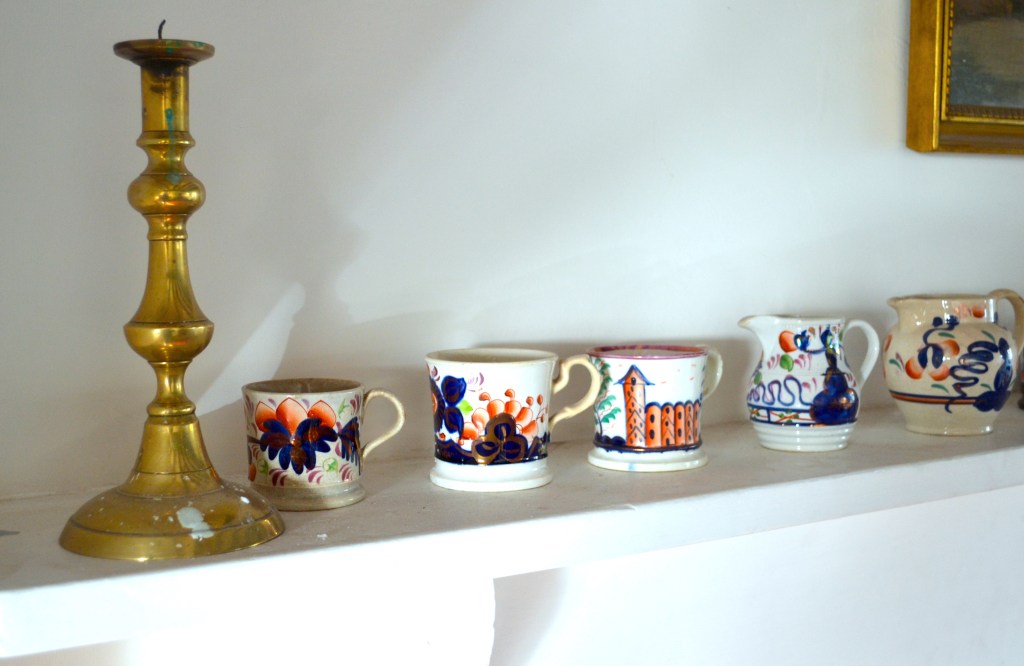
If the blue and white dragon china isn't of Welsh origin, what about the Welsh Gaudy china, shown above on my brother's mantlepiece? Its bright patterns remind me of fairground stalls and roundabout ponies: cobalt blue, copper lustre, burnt orange, fern green.  With names like 'Aberhonddu pattern', 'Bethesda', 'Glamorgan', surely Gaudy must be Welsh? But the glazed patterns don't look conventionally 'Welsh', despite some of them optimistically being called 'daffodils' - the shapes are distinctly odd.

Welsh Gaudy was made in Wales and England, but its designs were based on brightly coloured Japanese 'Imari ware' - and Imari china was made to appeal to Japan's export market. Welsh Gaudy was, in turn, partly made for overseas sale and became extremely popular amongst people of Welsh heritage in the USA. And so we end up with images based on Japanese motifs, adapted for a European market, inspiring decorative china manufactured in the UK for export to the United States as 'Welsh'!

Welsh Gaudy was not just for export, however. One of the best histories of the china is written by Jennifer Lewis and here she describes her personal connection to it as a child in Aberpennar (Mountain Ash):
"My involvement with Gaudy Welsh china began as a child in the 1950s in Mountain Ash, a mining town in the South Wales valleys.... A Gaudy Welsh tea service was displayed in the front room of our family home. Made in about 1860, it had been given to my great grandmother as a wedding present. She handed it down to her son's first wife, and it later passed to his second wife (my grandmother), and then to my mother ....  I remember the interior of my family home as being very dark, and the tea service on display as one of its few bright and lively aspects.
The service was valued by the women in my family and this was manifested in a range of repetitive tasks such as dusting, washing and re-arranging pieces on shelves."
Gaudy Welsh China: History, Technology, Design and Decoration, Jennifer Lewis,
Interpreting Ceramics, 2011, issue 13
Owls or flowers?
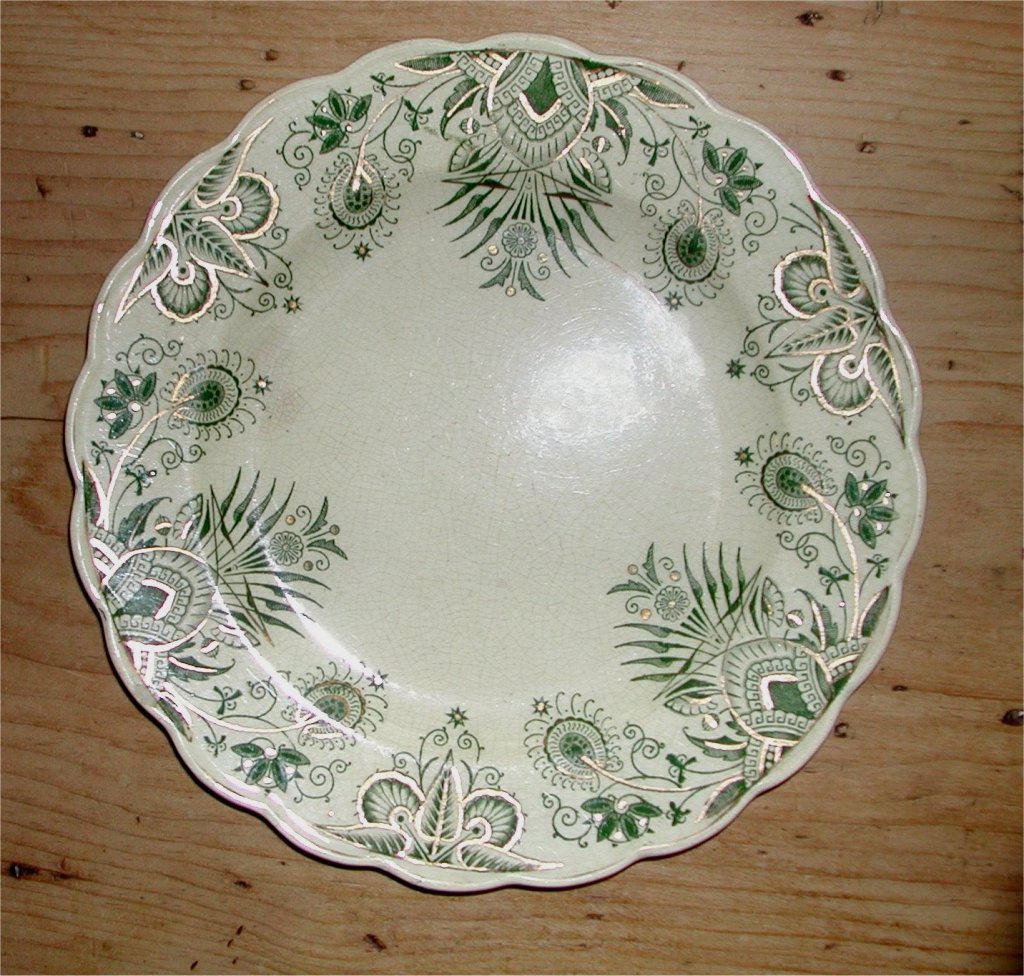
While writing about dragons, drawings and my grandmother’s blue and white china, I remembered a book I had read as a teenager – a terrifying story, set in a Welsh valley, that began with strange scratchings in the attic. Below the attic there’ s a bedroom, and, in that bedroom, there’s a girl in pain who wants to find the source of the sounds. All that can be found in the roof space is an odd dinner service that has an unsettling effect on all who see it. This, against everyone’s better judgement, is brought down to her. She begins to copy the beguiling images on the plates, not sure if she is drawing owls or flowers. And soon she’s unable to stop.
The Owl Service by Alan Garner is a novel inspired by one of the branches of the Mabinogion – the story of a woman conjured by a magician from flowers of oak and broom and meadowsweet. Blodeuwedd had been happy to live as flowers on the mountainside, had never planned to be a wife, let alone be married to the hapless Lleu Llaw Gyffes who has a curse on his head. In The Owl Service, Alan Garner echoes the theme of that story.
Nowadays there are many children’s books that re-tell traditional stories, but it was relatively unusual then. Alan Garner was writing about many other things not often depicted in children’s books of the 1960s: about class; sexual attraction; the relationship between the Welsh and the English; about female power and the patriarchy – and even about periods.
During the four years he worked on the book, Alan Garner learnt Welsh.
“The measure of Alan Garner’s thoroughness as a researcher and dedication as an author is the fact that, to write his latest novel, he learns Welsh – in order not to use it”
Michael Hardcastle Liverpool Daily Post, August 22, 1967.
“In order not to use it?”
Perhaps so as not to exploit the language for colour… not to rely on a cliched “Look you, boyo,” dialect. Does Alan Garner succeed? Only partly, perhaps, as far as the language goes, but it is a marvellous book and if you haven’t read it… well, pam lai?
© Sarah Williams 2023
 Straeon Rhyfedd – Strange Tales – Blogging old-style
Leave a comment